Volvo TD122
1988–1990
Volvo supplied 12-liter TD122 diesels for North American road work in the White and WhiteGMC period. The California records show several Bosch-equipped inline-six calibrations, from a 300-hp example to a 365-hp version for 1990. This family predates Volvo’s later electronically controlled D12 architecture. A truck’s engine plate and actual turbo and charge-air parts are particularly useful when repairing a truck that has been maintained through several owners.
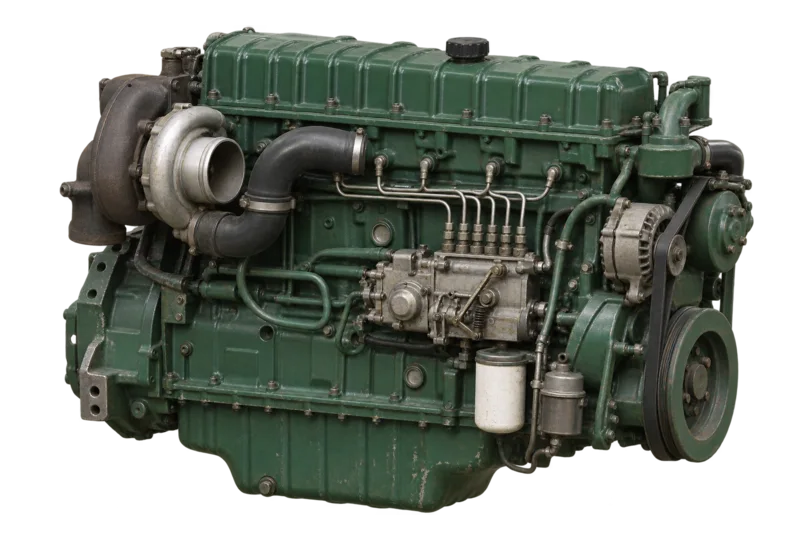
Key specifications
- Displacement
- 12.0 L (730 cu in)
- Configuration
- Charge-air-cooled inline-six diesel
- Fuel system
- Bosch mechanical pump and injectors on the documented road calibrations
- Typical factory output
- 300–365 hp across documented MY1989–90 engines. The 1990 365-hp version is rated at 1,900 rpm.
- Peak torque
- 1,000–1,200 lb-ft at 1,200 rpm in cited MY1990 examples
- Aspiration
- Turbocharged with charge-air cooling in California certification records
- Air-management hardware
- Certified 1990 configurations include a smoke puff limiter
Where it was used
The EPA identifies the TD122 in specified White and WhiteGMC trucks in MY1988–90. Separate MY1989 and MY1990 certification records list specific ratings and suffixes during those years.
- EPA campaign information identifies the engine in selected 1988–90 model-year White and WhiteGMC trucks.
- The MY1989 and MY1990 California heavy-duty on-road engine data sheets identify multiple North American TD122F variants.
Service life
300,000–400,000 milesHistorical heavy-duty rebuild benchmark
An early-1990s EPA study reported this range between rebuilds for heavy-heavy-duty diesels in its survey. The range describes the vehicles surveyed and is a point of comparison for this engine’s era.
Match the exact engine plates and fuel equipment to available overhaul parts before dismantling. Evaluate compression, hot oil pressure, air path condition and prior head or liner work; document findings cylinder by cylinder where relevant.
Typical problems and service checks
Separate 300-hp and 365-hp hardware
The certified examples use different Bosch combinations and fuel settings across ratings. Use the actual engine and equipment tags to ask a diesel fuel shop which pump calibration or replacement is applicable. A familiar displacement alone will leave out important parts information.
Inspect earlier air-management repairs
The federal recall description concerns a particular bypass valve population shared with the TD102. Ask for a record of any repair and examine the installed intake before trading an unusual noise or low-compression result for a blanket diagnosis.
Trace heat under the original work load
An older truck that overheats while working can have changes to its radiator, air ducts or fan system. Document the truck’s configuration and the conditions of the complaint so the shop can test the cooling system separately from boost and fuel delivery.