Volvo D13TC
2017–2026
The D13TC is Volvo’s distinct turbo-compound D13 configuration. An exhaust power turbine extracts energy downstream and supplies mechanical power back to the engine, supporting lower-rpm operation with the intended driveline. Its separate product ratings and turbo architecture matter when interpreting power, oil or exhaust complaints. Before comparing a quote with another D13 repair, verify the turbo configuration and the original engine and transmission package for the truck.
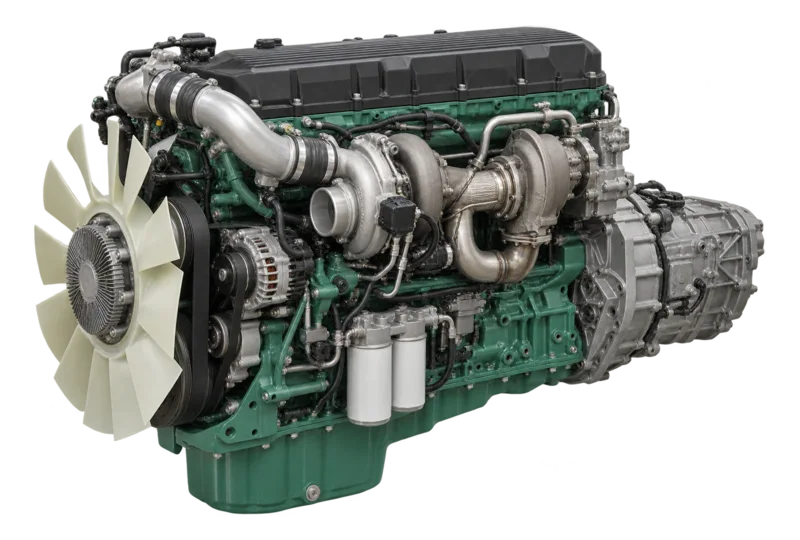
Key specifications
- Displacement
- 12.8 L (780 cu in), marketed as 13 L
- Configuration
- Turbocharged inline-six with mechanical exhaust power recovery
- Fuel system
- Electronically controlled direct injection; North American documentation describes common rail
- Typical factory output
- 405–500 hp in Volvo’s later North American D13TC overview
- Peak torque
- 1,750–1,950 lb-ft in the cited D13TC configurations
- Bore × stroke
- 131 × 158 mm (5.16 × 6.22 in)
- Aspiration
- Fixed-geometry turbocharger and separate exhaust-driven mechanical power recovery stage
- Compression ratio
- 18:1 in Volvo’s cited D13TC specifications
- Engine brake rating
- 500 hp at 2,200 rpm on the published D13TC specification
Where it was used
Volvo introduced North America’s first-generation D13TC in 2017 and announced it as standard in its VNL lineup in 2021. Later truck documentation continues to list the engine through this reference’s 2026 cutoff.
- Volvo documents D13TC-powered VNL 760 trucks in VTS Transportation’s U.S. fleet.
- Volvo reported that Tyson Foods used D13TC-powered VNL 740 tractors for national operations.
- Volvo’s later North American product material lists D13TC configurations for VNL and VNR.
Service life
1,200,000 milesOEM B50
Volvo’s D13TC product page explicitly links its fixed-geometry turbo design to the engine’s 1.2-million-mile B50 life. This is a design population benchmark, so use service history and measured condition for an individual unit.
Use the engine’s mechanical condition and maintenance history against the applicable Volvo procedure. Verify the separate turbocharger, power turbine and related oil paths before pricing a major component swap.
Typical problems and service checks
Point to the device that failed
A hose leak, a main turbo problem and a power-turbine issue belong in different parts of the diagnostic record. Keep both the installed part identity and the evidence that singles out the affected circuit before approving a replacement.
Use the installed aftertreatment and gearing
Volvo offers several torque and driveline packages. If a power complaint occurs on a particular route, identify the selected mode, transmission behavior and engine speed before comparing it with a diagnostic run.
Check oil architecture for the year
Volvo body-builder documentation identifies changes to filter arrangements for specified D13TC model years. Confirm the oil system diagram and last service record for the engine under review. Turbo stage diagnosis and filter selection both depend on knowing the exact build.