PACCAR PX-7
2021–2026
PACCAR classifies its 6.7-liter PX-7 in the medium-duty engine catalog. Peterbilt also specifies it as a power option in the Class 8-oriented Model 548, which makes this a useful example of why engine category and chassis GVWR are separate. A tow or utility truck can build hours rapidly without accumulating a line-haul odometer reading. Identify the engine and the body equipment before diagnosing changes in idle behavior, estimating filter life or choosing a repair.
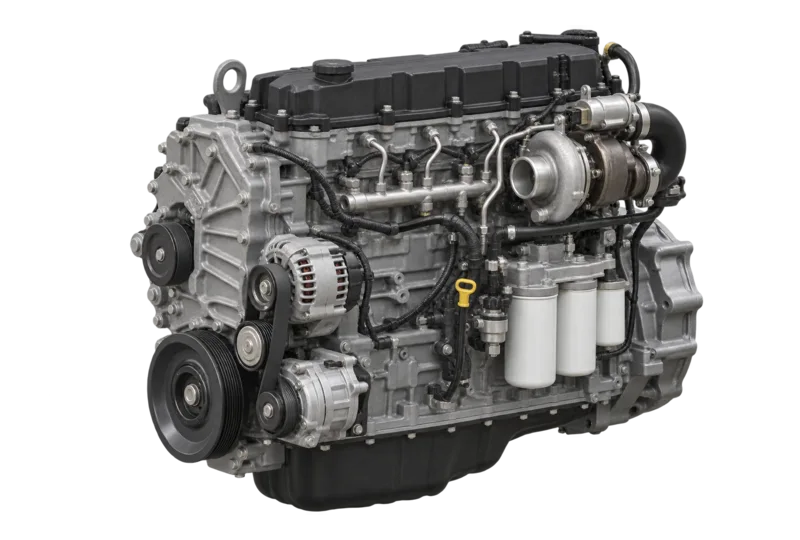
Key specifications
- Displacement
- 6.7 L
- Configuration
- Inline six-cylinder turbocharged diesel
- Fuel system
- Electronically controlled high-pressure common rail
- Typical factory output
- 200–360 hp and 520–800 lb-ft in the 2024 rating chart; the 340 and 360 hp entries are fire-service-only ratings
- Peak torque
- 520–800 lb-ft on the 2024 spec sheet, with 800 lb-ft reserved for fire service
- Bore × stroke
- 107 × 124 mm
- Aspiration
- Turbocharged and charge-air cooled
- Dry weight
- 1,150 lb (2024 specification)
- Oil system capacity
- 19.5 US qt (2024 specification)
Where it was used
The PX-7 engine family predates 2021. This row starts with the documented 2021 generation of Class 8 specialty chassis such as the Peterbilt Model 548, rather than counting earlier medium-duty availability as Class 8 evidence.
- Peterbilt Model 548 Class 8 specialty series, with PX-7 listed among the diesel options on the factory specification sheet.
- Peterbilt documented the PX-7 in a Model 548 with a flatbed tow body, a specific vocational use of the chassis.
Service life
≈680,000–910,000 milesClass 8 diesel rebuild benchmark
In the U.S. EPA rebuild survey, the two averages for Class 8 diesels were about 680,000 miles for a first in-frame rebuild and 910,000 miles for a first out-of-frame rebuild. These are comparison points for the vehicle class. A model-specific overhaul interval could not be verified. DTI Trucks published 6,958 ECM miles and 332 ECM engine hours on its 2014 Kenworth T370 tandem flatbed with a 300 hp PX-7 and 54,600 lb GVWR. That low-use directional-boring support truck gives an individual reading. A Class 8 first-overhaul interval is unavailable.
Review engine hours, idle duty, oil consumption and the findings from a matched compression or crankcase test. Before major internal work, compare the condition of the installed engine with the exact main-bearing, cylinder and shaft limits.
Typical problems and service checks
Intermittent loss of power after a filter change
Compare the actual replacement part and layout with the service record. Confirm priming and supply-side behavior before treating a rail pressure warning as evidence that the pump failed. Check what happened with the utility or tow body switched on.
High idle behaves differently with the body active
Confirm the body controller's request and check normal stationary engine-control states using the vehicle information. An engine that follows the requested idle mode consistently leaves a different trail from one that stumbles despite a steady request.
Frequent filter service on short winter routes
Record oil and exhaust temperature history and the engine's duty before judging a service interval. Repeated light-load running can complicate aftertreatment operation. The correct procedures and approved lubricants come from the applicable PX-7 manual.
References
- PACCAR PX-7 engine overview
- Peterbilt 2024 PX-7 spec sheet
- Peterbilt Model 548 factory sales sheet
- Peterbilt Model 548 introduction
- Peterbilt Model 548 tow truck with PX-7
- New York State contract specification, 40,600 lb GVWR PX-7 Kenworth T370
- DTI Trucks original sale walkthrough, stock 17786D
- U.S. EPA, Heavy-Duty Engine and Vehicle Standards Regulatory Impact Analysis, Table 2-10