PACCAR MX-13
2010–2026
PACCAR brought the 12.9-liter MX into North American production in 2010 and introduced a revised high-pressure common-rail system for the 2013 MX-13. The diesel served both highway sleepers and vocational chassis, so a family badge can cover quite different equipment and operating histories. Use the engine serial and emissions label to find the correct parts and service information. On a used truck, check the build record as well, especially when a previous owner replaced the engine or aftertreatment.
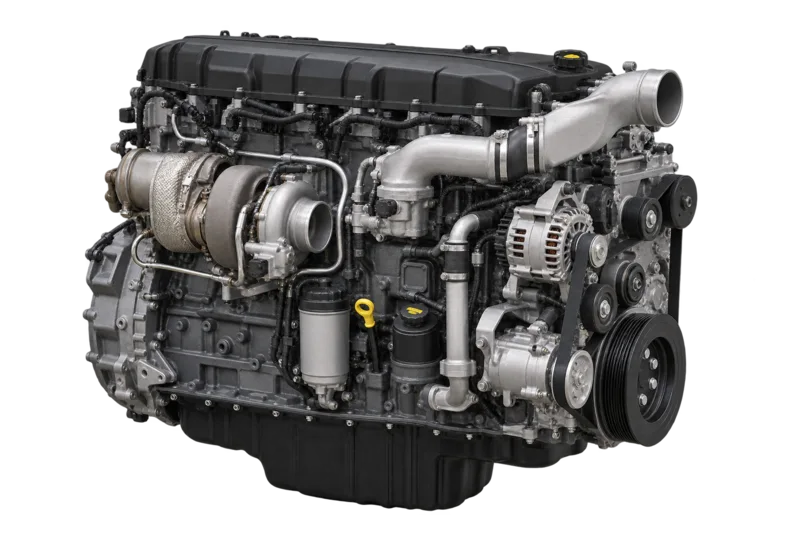
Key specifications
- Displacement
- 12.9 L
- Configuration
- Inline six-cylinder turbocharged diesel
- Fuel system
- High-pressure common rail from the 2013 redesign; verify earlier MX hardware by engine serial
- Typical factory output
- 405–510 hp and 1,550–1,850 lb-ft in the current US EPA product listing
- Peak torque
- 1,550–1,850 lb-ft (2025 EPA sheet)
- Bore × stroke
- 130 × 162 mm
- Aspiration
- Turbocharged and charge-air cooled
- Dry weight
- 2,500 lb (2025 specification)
- Governed speed
- 2,100 rpm (2025 specification)
Where it was used
North American production of the 12.9 L MX began in 2010. PACCAR documented the MX-13 name and common-rail redesign for 2013; current US EPA-spec offerings are included through the 2026 research cutoff.
- Kenworth T680 line-haul tractors and T800 vocational trucks with the North American 12.9 L MX family.
- Kenworth T880 vocational and sleeper configurations, including an MX-13-powered 2015 award truck.
- Peterbilt Model 579 and selected vocational Model 567 configurations.
Service life
1,000,000 milesOEM B10 for linehaul
PACCAR publishes a 1-million-mile B10 design life for the MX-13 in linehaul service. This means the manufacturer expects 90 percent of engines in that duty to reach the mileage without a major overhaul.
Compare measured hot oil pressure and crankcase pressure with the correct engine specifications. Layer in oil consumption, contaminated-fluid history and inspection of the block and crank before choosing an overhaul scope.
Typical problems and service checks
Coolant warning without a confirmed leak
Kenworth bulletin 42-052 addresses coolant level and pump weep evidence on specified 2013–2014 applications. A technician should identify the chassis and verify the cold level, actual leak pattern and applicable instructions before condemning the coolant pump.
Rail pressure falls on a long pull
Save requested and actual pressure together at the trigger load. The low-pressure supply and rail controls each need their specified checks. A current common-rail workflow cannot automatically be carried over to the early North American MX.
DPF complaints after oil consumption climbs
Put regeneration history and added oil on the same timeline. The technician can review engine-side oil or air handling findings and the filter's condition separately. Verify the installed emissions configuration before applying any service limits.
References
- PACCAR 2012 earnings release and North American MX production history
- PACCAR US EPA MX-13 product page
- Kenworth early MX-13 applications
- Peterbilt Model 579 factory brochure
- Peterbilt 567 powertrain brochure, PACCAR MX-11 and MX-13 specifications
- Kenworth bulletin 42-052
- PACCAR 2025 MX-13 specification sheet
- Kenworth PACCAR engine overview
- Taylor & Martin original truck auction catalog, lot 258
- PACCAR / PacLease, MX engine B10 design life and scope