PACCAR MX-11
2016–2026
The PACCAR MX-11 is a 10.8-liter Class 8 diesel offered where engine weight, packaging or vocational equipment can shape the spec. A regional 579 and a refuse 520 can share the engine name while accumulating very different percentages of idle time and PTO work. Match the repair request to the engine serial, emissions generation and chassis equipment. Check the current rating on the truck itself before using a brochure number for a specific unit.
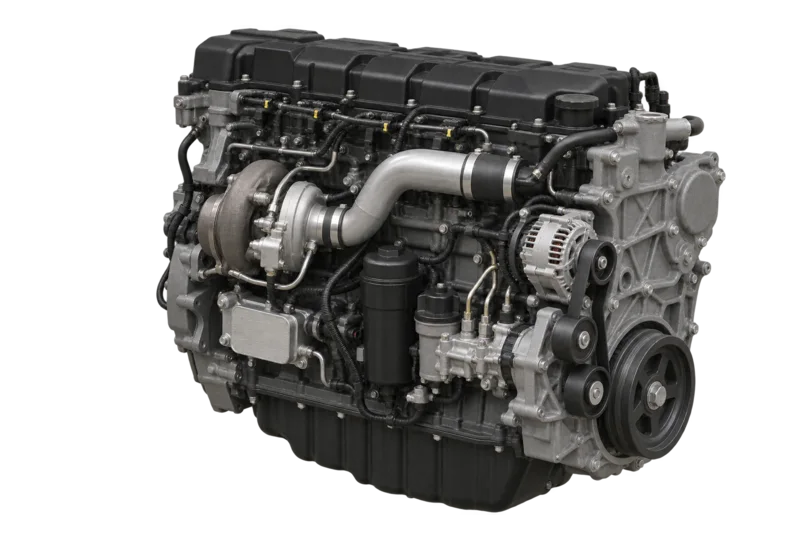
Key specifications
- Displacement
- 10.8 L
- Configuration
- Inline six-cylinder turbocharged diesel
- Fuel system
- Electronically controlled high-pressure common rail
- Typical factory output
- 355–445 hp and 1,250–1,700 lb-ft in PACCAR's 2025 US specification
- Peak torque
- 1,250–1,700 lb-ft (2025 EPA sheet)
- Bore × stroke
- 123 × 152 mm
- Aspiration
- Turbocharged and charge-air cooled
- Dry weight
- 2,200 lb (2025 specification)
- Oil system capacity
- 39 US qt (2025 specification)
Where it was used
PACCAR announced the North American engine in late 2015. Kenworth documented US-market availability in the T880 for 2016; the US EPA-spec engine remains listed at the 2026 cutoff.
- Kenworth T880, offered with the MX-11 for 2016.
- Peterbilt 579 highway trucks and 567 vocational configurations.
- Peterbilt 520 refuse chassis, including equipment-specific PTO and body-control configurations.
Service life
1,000,000 milesOEM B10 for linehaul
PACCAR publishes a 1-million-mile B10 design life for the MX-11 in linehaul service. This means the manufacturer expects 90 percent of engines in that duty to reach the mileage without a major overhaul.
Read running hours alongside mileage on vocational trucks. Check late-service oil samples, blow-by readings and oil or coolant use against documented duty before authorizing cylinder or bearing work.
Typical problems and service checks
Oil use hidden by a low odometer reading
Collect the oil added between known hour readings, including PTO use. A low distance figure can hide extensive engine operation on a refuse or service chassis. Verify external leaks and the manufacturer's crankcase checks before pricing internal repairs.
Torque complaint appears only with a working body
Record PTO request, engine speed and which hydraulic equipment was running. Verify what torque the truck was allowed to produce, then compare it with the driveability complaint. The chassis configuration can change which signals are relevant.
Soot load returns during short routes
Check drive time, idle hours and events since the last completed regeneration. Where temperature or differential-pressure behavior looks wrong, test the relevant circuit before assuming an irreversibly restricted filter core.
References
- PACCAR 2025 MX-11 specification sheet
- Kenworth T880 2016 MX-11 availability
- Peterbilt Model 579 factory brochure
- Peterbilt 567 powertrain brochure, PACCAR MX-11 and MX-13 specifications
- Peterbilt Model 520 powertrain specifications
- PACCAR MX-11 operator's manual
- Kenworth 2017 PACCAR engine brochure
- Ritchie Bros. Phoenix original truck auction catalog, lot 485
- PACCAR / PacLease, MX engine B10 design life and scope