Detroit Diesel DD13
2009–2026
The DD13 is the smaller-displacement engine in Detroit’s highway heavy-duty trio. It appears in regional highway work and in select vocational chassis that also serve as tractors. Engine generations share the name while changing particular components and maintenance instructions. Start with the installed engine serial number and the chassis filtration and cooling package. That combination answers more parts questions than the hood badge or a quotation copied from another DD13 truck.
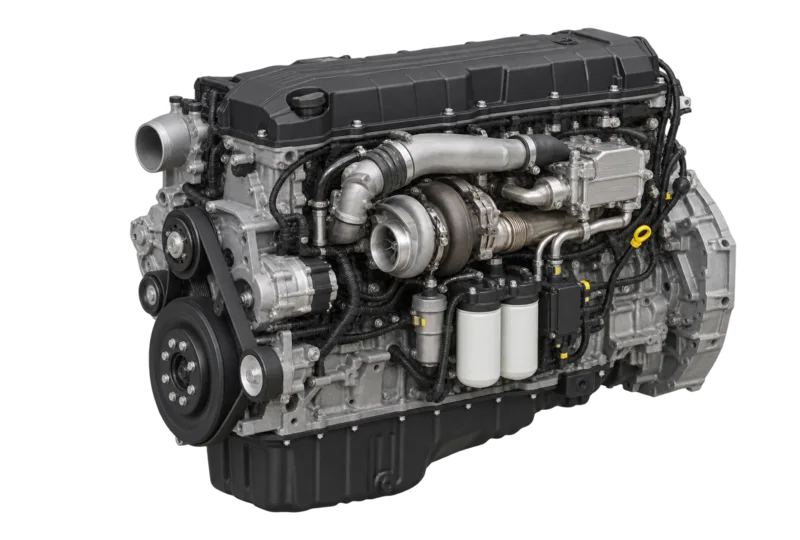
Key specifications
- Displacement
- 12.8 L.
- Configuration
- Four-stroke, turbocharged inline six.
- Fuel system
- Electronic high-pressure common-rail direct injection, generation-dependent hardware.
- Typical factory output
- Selected Western Star ratings span 410–525 hp and 1,450–1,850 lb-ft. Use the rating for the actual chassis and year.
- Peak torque
- 1,450–1,850 lb-ft in selected Western Star configurations.
- Bore × stroke
- Approx. 132 × 156 mm for EPA10/GHG14, using Detroit’s published stroke and stroke-to-bore ratio.
- Aspiration
- Turbocharged and charge-air-cooled. Verify the installed turbo by generation.
- Valvetrain
- Dual overhead cams, four valves per cylinder in the EPA10/GHG14 specifications.
- Compression ratio
- 17.3:1 for Detroit’s cited EPA10/GHG14 specification.
Where it was used
The DD13 followed the DD15 in Detroit’s North American HDEP rollout around 2008–2009. This directory begins with the approximate early highway model-year era. The Gen 5 DD13 falls within the coverage. Detroit’s announced Gen 6 production begins in 2027, beyond the cutoff.
- Freightliner’s Cascadia literature documents DD13 offerings. Western Star lists the DD13 in its powertrain lineup for applicable vocational and tractor specifications.
- On a day cab or vocational tractor, cooling and chassis filtration can differ from another truck with the same engine. Identify those components before scheduling a repair.
Service life
1,000,000 milesOEM B50
CARB Table II-4 attributes the 12.8 L Class 8 B50 to Detroit’s 2017 DD13 material. B50 is a population design metric about major overhaul or failure, and the reported figure applies to that published configuration.
Use the correct Detroit service chart, oil-use and hours record and previous aftertreatment entries. Ask for a before-and-after test that reflects the duty where the fault occurred.
Typical problems and service checks
Fuel-filter module identity
Confirm the exact housing and filter positions from the engine serial, then identify any chassis separator. Record the proper priming and post-service leak checks. A filter number from another generation may leave the job incomplete.
Air-system leaks under load
Give the technician load, speed, grade and time since the last intake or cooler work. Compare the measured air-system response with the applicable Detroit procedure. An idle check and a loaded pulling complaint answer different questions.
Exhaust service records
Save the full warning and aftertreatment fault data before a reset. Document the pressure and temperature checks the shop performed, and tie a cleaning or replacement invoice to the actual assembly in the chassis.
References
- Detroit history of the DD heavy-duty platform and generational update
- Detroit DD13 current engine profile and rating table
- Detroit Gen 5 DD platform operator manual
- Detroit heavy-duty DD platform operator manual
- Freightliner Cascadia specification and engine options brochure
- Western Star Detroit engine rating and option guide
- Detroit DD platform general specifications filed with NHTSA
- CARB heavy-duty warranty rulemaking, Table II-4 of manufacturer B-life figures