Cummins X15
2017–2026
A lot of modern North American linehaul trucks carry an X15, but the badge does not identify how yours is built. Cummins offers Efficiency ratings and versions aimed at harder pulls or vocational work. Chassis, hardware and calibration change by year. Before approving fuel-system or turbo work, confirm the engine serial and the original fault conditions. An X15 that made power yesterday can still feel weak from a sudden derate today.
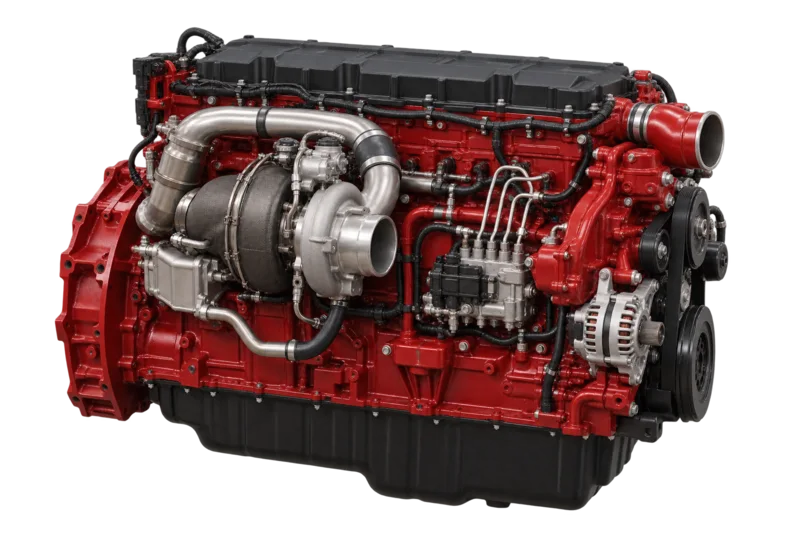
Key specifications
- Displacement
- 14.9 L (15-liter class)
- Configuration
- Inline six
- Fuel system
- XPI high-pressure common-rail diesel
- Typical factory output
- 2024 Efficiency truck ratings begin at about 400 hp. Selected Productivity builds reach 605 hp.
- Peak torque
- 1,450–1,850 lb-ft (2024 Efficiency Series)
- Governed speed
- 1,700 rpm (2024 Efficiency Series)
- Dry engine weight
- 2,961 lb (2024 Efficiency Series)
Where it was used
The X15 truck family replaced the ISX15 name for 2017. Efficiency, Performance and Productivity versions overlap. This entry covers diesel X15 truck builds through 2026, with X15N gas handled separately.
- Cummins documents the X15 in Class 8 long-haul, heavy vocational and high-load truck specifications.
- Use the truck VIN and engine serial to distinguish an Efficiency or Productivity build from a Performance or specialty variant.
Service life
≈560,000–746,000 milesDocumented X15 fleet overhaul range
In a Cummins interview, an Australian fleet reported in-frame overhauls at 900,000 to 1.2 million km for Euro 5 X15 engines in its own operation. U.S. builds and cycles can differ.
Cummins sells overhaul packages for the X15. When oil use starts to climb or hot oil pressure falls, compare the trend with previous samples and follow the manufacturer’s tests before deciding what should come apart.
Typical problems and service checks
Fuel delivery under load
Capture the data during the first torque loss if the vehicle can be tested safely. Check low-pressure supply and command-versus-actual rail behavior with the correct engine procedure. High-pressure pump design and service options differ across generations.
Low boost and turbo response
Check the air circuit and actuator response before replacing a VGT. A leak at a boot can show up only under load. Confirm whether the controller is limiting torque before comparing boost figures across two engine builds.
Ash service and oil condition
The particulate filter’s service history and the oil used belong next to the fault report. A regeneration can address soot, while ash requires its own maintenance. If oil was being consumed, establish the cause before putting a serviced filter back to work.