Cummins X12
2018–2026
The X12 trades some displacement for a lighter package. It fits tractors that make money carrying a few extra pounds of payload and trucks that work heavy but do not need the largest engine on the option sheet. Do not assume it is a later ISX12 with different paint. The installed build and duty category matter when you are looking up a service interval or ordering an engine part.
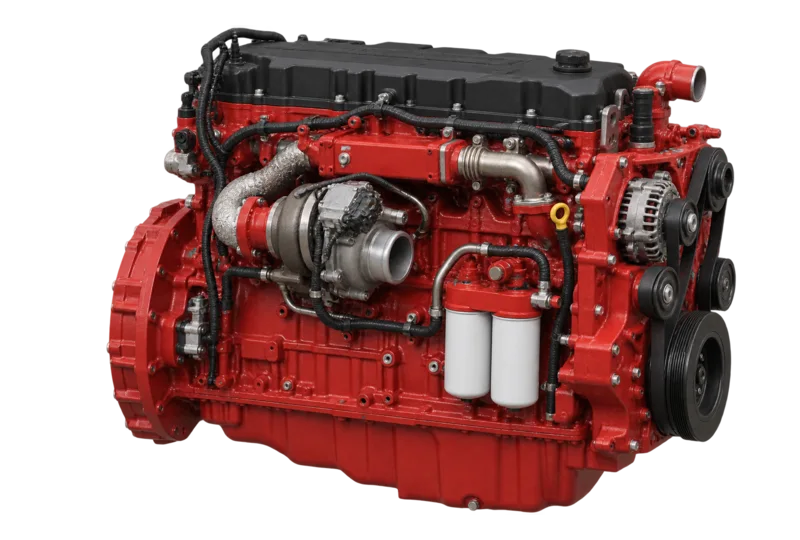
Key specifications
- Displacement
- 11.8 L
- Configuration
- Inline six
- Fuel system
- XPI high-pressure common-rail diesel
- Typical factory output
- 2024 truck ratings vary by application and reach 500 hp in selected X12 configurations.
- Peak torque
- 1,250–1,700 lb-ft (2024 truck ratings)
- Rated output speed
- 1,800–2,000 rpm (2024 ratings)
- Dry engine weight
- 2,050 lb (2024)
- Aftertreatment weight
- 191 lb for the listed 2024 configuration
Where it was used
Cummins announced North American vocational availability in 2018. The Cascadia day-cab regional-haul X12 combination followed, with production planned for mid-2020. The display ends at the 2026 cutoff.
- Autocar ACX heavy vocational trucks and the Western Star 4700 were documented Cummins X12 applications.
- The Freightliner Cascadia 116-inch BBC day cab paired an X12 with the Endurant automated transmission for regional hauling.
Service life
≈680,000–910,000 milesClass 8 diesel rebuild benchmark
In the U.S. EPA rebuild survey, the two averages for Class 8 diesels were about 680,000 miles for a first in-frame rebuild and 910,000 miles for a first out-of-frame rebuild. These are comparison points for the vehicle class. A model-specific overhaul interval could not be verified.
A regional tanker or vocational truck can work the X12 very differently from a steady highway tractor. Ask for engine hours, duty-cycle history and oil-use records. Use them with the truck’s test results before estimating remaining life. The 2024 literature quotes maintenance intervals rather than a promised overhaul mileage.
Typical problems and service checks
Loss of pull with added load
A short idle check cannot recreate a loaded regional haul. Save the torque limit and compare requested values to measured boost and fuel supply in a safe controlled test. A derate and weak air delivery can feel the same at the pedal.
Difference between restriction and EGR response
Compare the air path, relevant sensor readings and actuator commands before pricing a turbo or an EGR component. Tight packaging makes a chafed or misaligned fitting worth checking, especially after radiator or front engine work.
Regeneration on local routes
Note how often the request returns and whether the previous regen completed. The low-RPM or stop-heavy route can be part of the story. Report the actual aftertreatment faults and service history before drawing conclusions about the filter.