Cummins NT / NTC 855
1975–1991
For many older trucks, “a 350 Cummins” means some version of the 855. The hardware beneath that nickname can be decades apart. Early engines and Big Cam revisions used different cam, cooling and control arrangements. A complete engine number and CPL matter far more than paint or the horsepower number on a cab badge. On a survivor, take stock of earlier rebuilds before planning the next one.
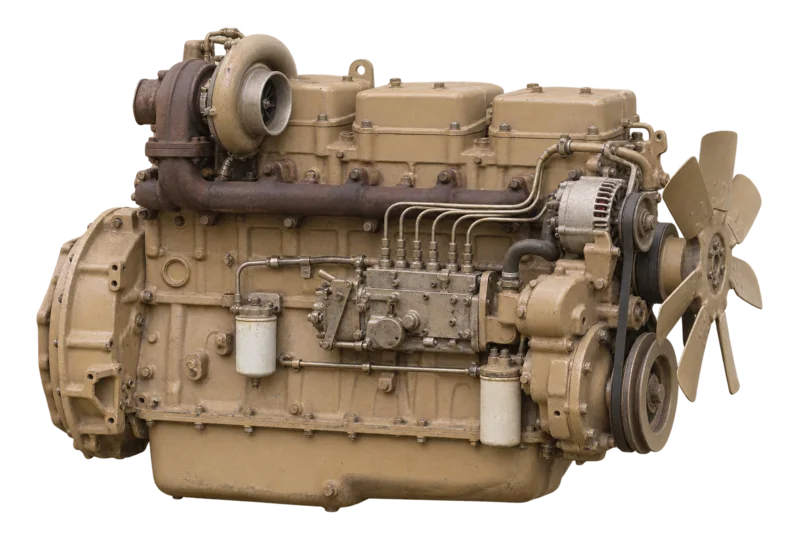
Key specifications
- Displacement
- 855 cu in (14.0 L)
- Configuration
- Inline six
- Fuel system
- Cummins PT diesel injection, specification varies by generation
- Typical factory output
- 350 hp is one well-documented highway rating. Check the nameplate for the actual calibration.
- Aspiration
- Turbocharged NTC builds; air cooling varies by version
- Peak torque example
- 1,325 lb-ft at 1,300 rpm (1988 NTC-400, CPL 827)
- Rated speed example
- 1,800 or 2,100 rpm for the listed 1988 NTC-400 calibrations
Where it was used
The 855 was already on the road in 1975. This catalog covers the older Small Cam and later Big Cam truck engines into the early-1990s N14 transition. The end year is approximate, and industrial 855 dates do not apply.
- North American heavy highway conventional and cabover tractors from the mid-1970s through the Big Cam era.
- Common work included linehaul and heavy loads. Cummins separately lists marine, generator and construction 855 versions.
Service life
≈350,000 milesPeriod operator overhaul benchmark
A long-time heavy-truck operator recalled about 350,000 miles as a period overhaul point and singled out the 855 among engines that could return to comparable mileage after a sound rebuild. The experience is from 1970s trucks and will vary on surviving engines and later builds.
There is no comparable mileage figure across the Small Cam and Big Cam generations. For a truck still working today, verified hours or miles since the last overhaul, crankcase pressure, hot oil pressure and a cooling-system check tell you much more than the chassis odometer.
Typical problems and service checks
PT fuel supply trouble
A weak pull or slow start can start at the tanks, filter or suction side before the pump. Identify the installed PT arrangement and the correct test. Pressure and calibration assumptions from a later CELECT engine do not apply.
Cooling changes across Big Cam versions
If the engine has a history of running hot, establish which cooling and aftercooler layout is fitted. A donor part that bolts on can still be wrong for the CPL. Bring any records of converted plumbing or earlier overhaul work.
Wear in an engine with several rebuilds
High oil use, blow-by or low hot oil pressure justify measurements before the next teardown. Where the head or liners have already been done, keep old machining records and check block and crank condition before committing to a kit.