Cummins M11
1994–1998
The M11 sits between the L10 and the ISM. It stays compact for a highway engine and was a good fit for tractors that spent more time on local or regional work than on heavy grades. Electronics and parts changed during its run. A truck advertised as an M11 can even have a later replacement, so read the engine plate before carrying repair advice from one year to another.
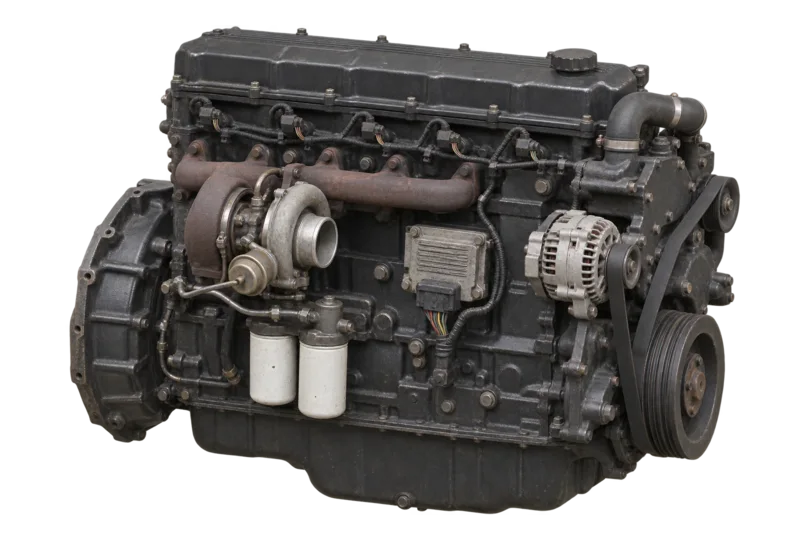
Key specifications
- Displacement
- 10.8 L (11-liter class)
- Configuration
- Inline six
- Fuel system
- CELECT or CELECT Plus electronic diesel injection, according to build
- Typical factory output
- Multiple fleet and higher-output ratings; read the engine plate for the installed version.
- Aspiration
- Turbocharged and charge-air cooled (MY1997 certified family)
- Rated speed example
- 1,800 rpm for the 400 hp M11-400E+ and selected 350 hp ratings
- Certified output example
- 400 hp (MY1997 M11-400E+)
Where it was used
Cummins ReCon literature identifies 1994 CELECT and 1996 and 1998 CELECT Plus automotive groups. The displayed dates describe that generation before the ISM transition, rather than every vehicle registration or service replacement.
- North American heavy fleet tractors, regional carriers and some heavy vocational trucks.
- Cummins lists 1994, 1996 and 1998 variants as automotive engines, with a separate M11 bus entry.
Service life
500,000–600,000 milesHistorical heavy-duty rebuild benchmark
In a 1990s EPA study, more fleets expected at least 500,000 miles to first overhaul, and some heavy-duty diesels reached 600,000 between rebuilds. These are fleet benchmarks rather than a rating for this engine.
An M11 bought today is an assessment of that particular engine. Check how far the current engine has run since work was done, then look at oil use, cranking and contribution data and available prior measurements. No published family-wide mileage makes a defensible promise for an older truck.
Typical problems and service checks
Intermittent cutout or fault codes
A truck that cuts out over rough pavement or only when hot needs the original conditions preserved. Check the electronic supply, connections and harness under the applicable service procedure before blaming a controller or one injector.
Return of hesitation after a filter job
Get the exact filter numbers and the timeline. A system that took in air or has a restricted supply can mislead the first check. Find which CELECT generation is installed before interpreting fuel test results.
Heat and wear history
When coolant loss or hot-idle pressure is the complaint, ask for repeatable readings before teardown. A good cold start at the yard and a recent paint job say little about earlier overheating or the condition of the crank and block.