Cummins L10
1982–1994
The L10 gave fleets a lighter six-cylinder option than the 855 when the job did not need a big-bore engine. There are mechanical L10s and later electronic versions. The displacement stays the same, which makes it particularly easy to order parts for the wrong one. Read the plate, check the pump or control hardware on the block, and confirm which aftercooler the truck carries.
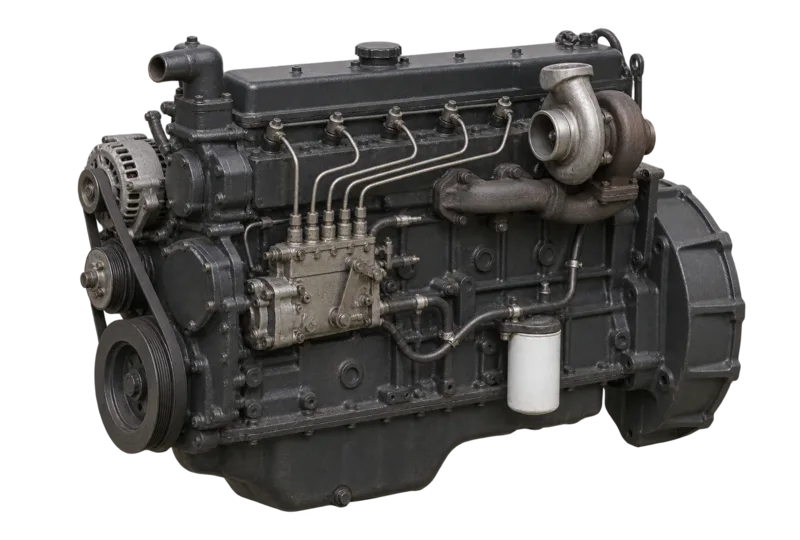
Key specifications
- Displacement
- 10.0 L
- Configuration
- Inline six
- Fuel system
- Mechanical PT on earlier configurations; CELECT on selected late versions
- Typical factory output
- Examples reached about 300–325 hp in high-output air-to-air-aftercooled configurations.
- Aspiration
- Turbocharged; selected versions use air-to-air charge cooling
- Charge cooling
- Match the cooler and plumbing to the specific factory rating
- Replacement parts ID
- Engine serial number and Cummins Control Parts List (CPL)
Where it was used
Cummins began L10 production in 1982. The catalog window extends through the early-1990s switch to the M11. Late registrations and service engines can fall outside the approximate highway window.
- Regional and fleet tractors and heavy straight trucks where a lighter engine suited the route.
- Cummins lists automotive L10 configurations separately from bus and industrial variants. Match the truck plate to the actual automotive parts list.
Service life
500,000–600,000 milesHistorical heavy-duty rebuild benchmark
In a 1990s EPA study, more fleets expected at least 500,000 miles to first overhaul, and some heavy-duty diesels reached 600,000 between rebuilds. These are fleet benchmarks rather than a rating for this engine.
The L10 service records do not give a single useful rebuild mileage. A truck that spent its life in local duty can carry far more engine hours than its dash suggests. Ask for prior top-end work, oil consumption under a similar duty cycle and a hot-pressure reading before pricing a teardown.
Typical problems and service checks
Mechanical supply versus electronic faults
On a mechanical L10, begin with supply and the appropriate PT procedure. A late CELECT engine adds its own power, wiring and electronic checks. Identify the system in the truck before fitting a pump or pricing electronic parts.
The right aftercooler
Aftercooler versions varied. Identify the cooling and air path before treating a hose routing or temperature observation as an engine fault, especially on a truck that has already received a different long block.
Top-end wear and adjustment
An uneven idle, an unexplained tick or fading cylinder contribution can justify an overhead inspection. Use the installed engine procedure to assess the valvetrain and injectors. A clean idle reading on a short cold inspection leaves several wear issues open.