Cummins KT / KTA 1150
1975–1980
A truck with the 1,150-cubic-inch Cummins is easy to confuse with one of the more numerous 855-powered trucks if all you get is a photo of the cab. The displacement and the data plate settle it. Kenworth’s 1975 California certification includes a KTA-600, and the period Ford parts book identifies a 1979 KTA application.
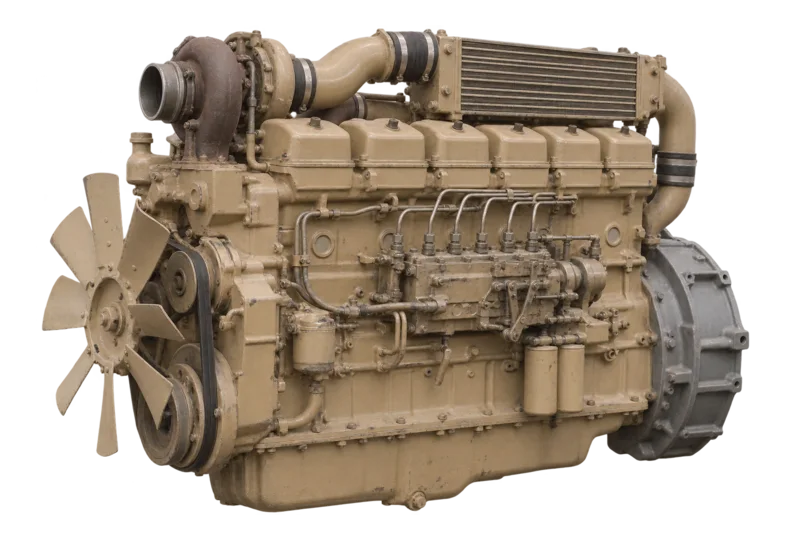
Key specifications
- Displacement
- 1,150 cu in (18.8 L)
- Configuration
- Inline six
- Fuel system
- Cummins PT mechanical diesel injection
- Aspiration
- Turbocharged KT; turbocharged and aftercooled KTA
- Certified output examples
- 450 hp KT-450; 600 hp KTA-600 (MY1975)
- Peak torque examples
- 1,350 lb-ft KT-450; 1,650 lb-ft KTA-600 (MY1975)
Where it was used
These dates bracket the cited U.S. highway records. Industrial and marine K19 derivatives follow different application timelines.
- Kenworth heavy-duty vehicles with KTA-600, approved in California for 1975.
- Ford 600–900 series heavy-truck parts catalog identifies a 1979 KTA-600 application.
Service life
300,000–400,000 milesHistorical heavy-duty rebuild benchmark
An early-1990s EPA study reported this range between rebuilds for heavy-heavy-duty diesels in its survey. The range describes the vehicles surveyed and is a point of comparison for this engine’s era.
An old heavy-haul truck may have been repowered or rebuilt several times. Identify the current engine and ask for machining records before using the odometer in an estimate.
Typical problems and service checks
Confirm the engine identity
Record the serial number and CPL before ordering. Industrial K-family equipment and older road engines can share basic architecture while using different fuel and cooling parts.
Look for loss of coolant under load
Pressure-test the cooling system and investigate signs of gas intrusion. Establish whether a leak comes from the engine, its aftercooler, or external plumbing.
Trace weak pulling power
Compare fuel supply and air restriction with the proper service data before blaming the PT pump. Air leaks, neglected filters and worn components can feel similar from the cab.
References
- U.S. Federal Register, 1975 Cummins KT-450 and KTA-600 certification test results
- CARB, 1975 Kenworth new heavy-duty vehicle approval
- U.S. Federal Register, 1980 heavy-duty diesel engine certification results
- Ford 1973–79 Truck Master Parts and Accessory Catalog, 600–900 series
- U.S. EPA, Heavy-Duty Engine Rebuilding Practices