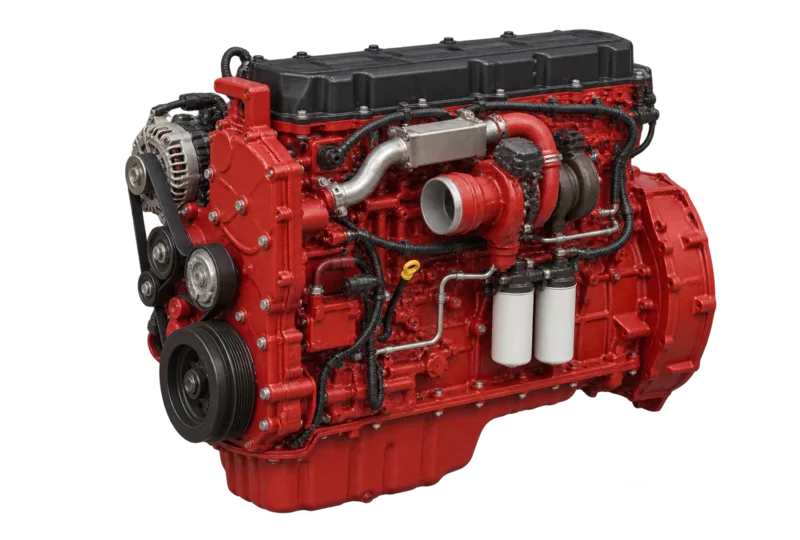
Cummins ISX11.9 / ISX12
2010–2018
The smaller ISX made sense in a regional tractor where carrying less engine weight mattered every day. It still shared several systems with the larger ISX15, including high-pressure common rail on the documented highway builds. The 11.9 and 12 names can appear in records for related versions, and a Cummins Westport 12-liter gas engine is a different thing altogether. Start at the serial number, fuel type and emissions label.
Key specifications
- Displacement
- 11.9 L
- Configuration
- Inline six
- Fuel system
- XPI high-pressure common-rail diesel
- Typical factory output
- Up to 425 hp in the North American heavy-truck lineup; specialty ratings differ.
- Peak torque
- Up to 1,650 lb-ft in Cummins’ 2013 product data
- Aftertreatment
- DPF and SCR on EPA 2010 and EPA 2013 versions
- Engine controls
- Electronic fuel metering; match parts to engine serial and emissions family
Where it was used
Cummins groups early 2010–2012 ISX11.9/ISX12 builds and later ISX12 production. The diesel is grouped here through the X12 transition, with cutover differences by truck and application.
- Class 8 regional tractor and vocational heavy-truck applications.
- Cummins lists separate heavy-truck, fire apparatus and motorcoach variants. Their ratings and service parts should be looked up separately.
Service life
≈680,000–910,000 milesClass 8 diesel rebuild benchmark
In the U.S. EPA rebuild survey, the two averages for Class 8 diesels were about 680,000 miles for a first in-frame rebuild and 910,000 miles for a first out-of-frame rebuild. These are comparison points for the vehicle class. A model-specific overhaul interval could not be verified.
Low-mileage local tractors can accumulate enough hours to age the fuel and emissions systems before there is evidence of cylinder wear. Use recorded hours, litres or quarts of make-up oil, a coolant trend and the engine-specific tests. A single rebuild mileage is not documented for the family.
Typical problems and service checks
Fuel pressure after service
If cranking became longer after a filter change, establish low-side supply and priming before pricing high-pressure parts. Record commanded and measured pressure under the appropriate diagnostic conditions. Leave common-rail fittings to a qualified technician.
Variable-geometry turbo response
When the truck loses boost on a pull, compare actuator demand against the measured response and inspect the charge-air path under the applicable procedure. A slow actuator, a bound mechanism and a leak are separate repair decisions.
Frequent requests for regeneration
Track completed regenerations, duty cycle and previous ash service. A restricted filter can be real, but a sensor or an engine-wide air/fuel complaint can change the filter readings. Follow the procedure for the installed emissions generation.