Cummins ISL / ISL9
2004–2016
The diesel ISL and ISL9 turn up in vehicles that spend as much time idling or working a PTO as they do moving down the highway. Cummins and Navistar identified ISL availability in their Class 8 program in 2008. Build year matters when you compare two used engines, particularly for emissions and brake hardware.
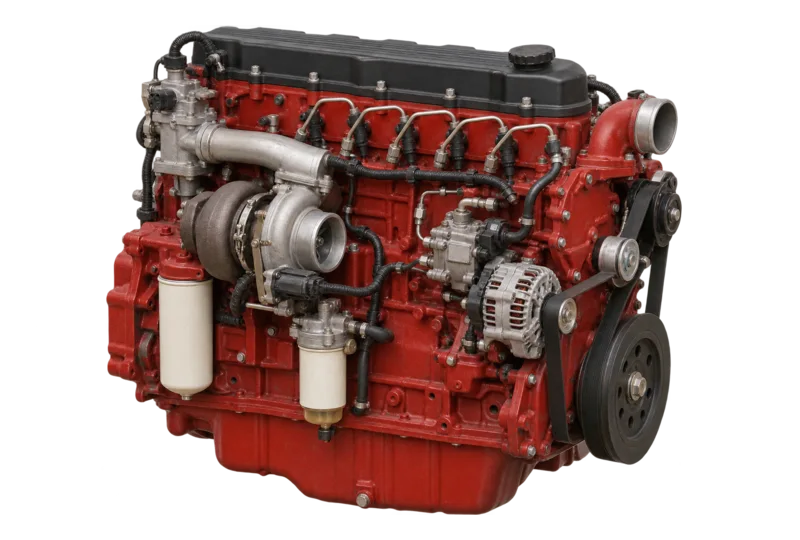
Key specifications
- Displacement
- 8.9 L
- Configuration
- Inline six
- Fuel system
- Electronically controlled diesel injection; later ISL9 uses common rail
- Aspiration
- Turbocharged and charge-air cooled
- Engine brake
- Optional Jacobs compression-brake configurations by build
- Aftertreatment generations
- EPA 2004 configuration; DPF on EPA 2007; DPF and SCR on EPA 2010-era ISL9
Where it was used
The catalog range reflects the cited North American ISL generations up to the 2017 L9 naming transition.
- International Class 8 vocational program documented by Cummins and Navistar.
- North American diesel truck ISL and ISL9 generations identified separately in the Cummins/Jacobs applications guide.
Service life
≈680,000–910,000 milesClass 8 diesel rebuild benchmark
In the U.S. EPA rebuild survey, the two averages for Class 8 diesels were about 680,000 miles for a first in-frame rebuild and 910,000 miles for a first out-of-frame rebuild. These are comparison points for the vehicle class. A model-specific overhaul interval could not be verified.
Compare hours, idle percentage and PTO time with actual distance. A low-mileage vocational chassis can have extensive engine use, so check oil consumption and coolant and oil sample trends.
Typical problems and service checks
An intermittent lack of boost
Measure actual boost under the conditions that set the fault. Check the charge-air circuit and confirm the turbo control system before pricing an actuator.
DPF faults during short duty cycles
Separate interrupted regeneration from excess soot production or a sensor issue. Compare operating temperatures, pressure readings and fault history with the matching emissions generation.
Oil loss, venting or dilution
Track oil added between services and verify oil temperature and fuel dilution. A single crankcase-pressure reading is easier to interpret alongside the oil-use trend.
References
- Cummins, ISL EPA 2004 specifications
- Cummins and Navistar, 2008 heavy-duty engine supply agreement
- Jacobs, Cummins ISL, ISL9 and L9 engine brake applications
- Cummins, 2007 on-highway engine certification announcement
- U.S. EPA, Heavy-Duty Engine and Vehicle Standards Regulatory Impact Analysis, Table 2-10