Cummins ISL G / L9N
2007–2026
The ISL G brought a spark-ignited version of the 8.9-liter platform to vocational service. Later L9N builds continued the line. A diesel ISL and an ISL G can appear in similar chassis, yet anyone diagnosing poor pull needs to identify the fuel and ignition system before choosing a test plan.
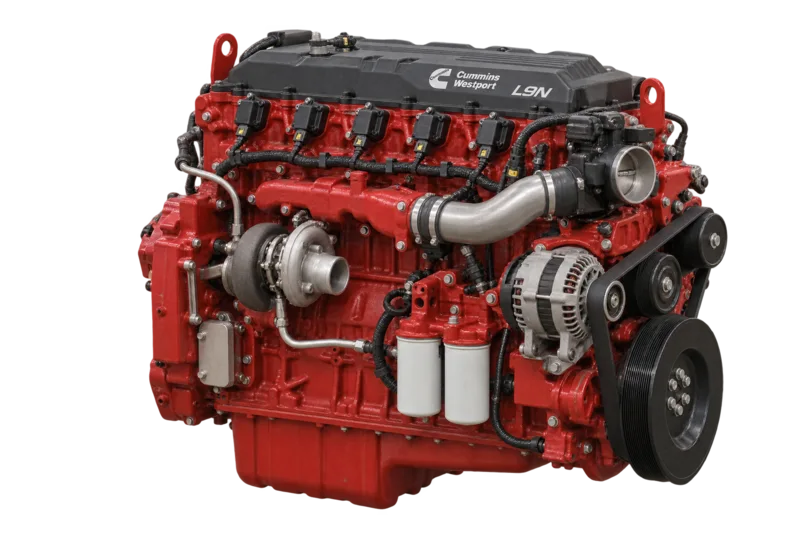
Key specifications
- Displacement
- 8.9 L
- Configuration
- Inline six
- Fuel system
- Spark-ignited natural gas, configured for CNG or LNG supply
- Typical factory output
- 250–320 hp on original ISL G ratings
- Peak torque
- 660–1,000 lb-ft on original ISL G ratings
- Aftertreatment
- Three-way catalyst
- Oil capacity example
- 7.3 U.S. gal on the published ISL G specification
Where it was used
The range starts with the 2007 engine release. Freightliner’s M2 112 Class 8 application was announced in 2009.
- Freightliner Business Class M2 112 tractor and truck, as documented by Westport.
- Class 8 distribution and drayage units in the SANBAG field project, plus later L9N refuse applications.
Service life
≈300,000 milesTransit overhaul benchmark
Orange County Transit plans the midlife overhaul of its CNG buses around 300,000 miles and specified L9N replacement engines in the cited procurement. This is a transit policy, with a different duty cycle from Class 8 freight work.
A refuse truck can accumulate high hours at modest road mileage. Check plug history, oil use and fault recurrence under load when deciding whether the job is ignition troubleshooting or internal engine work.
Typical problems and service checks
A repeat misfire under load
Use the engine’s cylinder and fault data to see whether the miss stays on one cylinder. Verify ignition and mechanical condition before broad parts replacement.
Catalyst or mixture faults
Review actual operating temperatures and fuel-control data before deciding the catalyst is faulty. Fuel supply verification belongs with personnel equipped for that gas system.
Varying response from one shift to the next
Record engine hours, fuel type, operating temperature and load when the issue recurs. The pattern can help a shop reproduce a complaint that an unloaded road test misses.
References
- Cummins Westport, ISL G EPA 2007 ratings and equipment
- Cummins, L9N truck and refuse applications
- Westport Innovations, 2009 annual report and Class 8 product history
- California Energy Commission, SANBAG Alternative Fuel Truck Projects
- Orange County Transportation Authority, CNG bus midlife engine overhaul