Caterpillar 3306
1975–1976
The 3306 was a mid-displacement mechanical diesel that appeared in U.S. truck service alongside larger 1693 and 3406 choices. Period Kenworth and Oshkosh approvals give it a documented place in heavy highway equipment, including a 1976 Oshkosh tractor. The same name appears on other Caterpillar applications. If an old truck has been repowered, read the installed engine tag and fuel arrangement before reusing a truck parts number or a previous power rating.
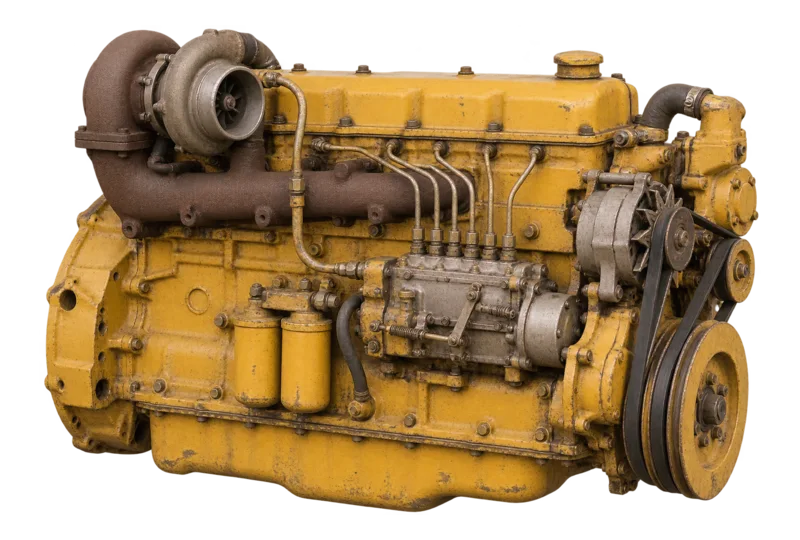
Key specifications
- Displacement
- 638 cu in, approximately 10.5 L.
- Configuration
- Four-stroke inline six.
- Fuel system
- Mechanical injection pump, separate injector lines and model-specific nozzles.
- Typical factory output
- 270 hp at 2,200 rpm for a specific 1976 turbo-aftercooled 3306. Caterpillar’s later highway guide documents a 300 hp 3306C example.
- Peak torque
- 1,150 lb-ft for the later 3306C 300 hp example in Caterpillar’s highway engine guide.
- Bore × stroke
- Approximately 4.8 × 6.0 in in the referenced dimension index; the bore is rounded.
- Aspiration
- Turbocharged. CARB documents a separate turbocharged and aftercooled arrangement.
- Injection pump example
- Caterpillar 9N2885 is documented in one 1976 certification. Check the serial before purchasing parts.
Where it was used
The index uses 1975–1976 as directly documented U.S. highway anchors. CARB lists a 3306 in Kenworth’s 1975 heavy-duty lineup and in a 1976 Oshkosh tractor approval. Caterpillar’s longer non-road production history is separate. Later U.S. tractor applications are possible, but the upper endpoint here reflects the documents used.
- CARB’s 1976 Oshkosh approval explicitly lists Tractor and 3306 in its vehicle and engine table. Its issued record ties the engine to a highway tractor in this directory’s U.S. window.
- Kenworth’s 1975 heavy-duty vehicle CARB order also lists the 3306. Confirm equipment by the vehicle and engine records because both manufacturers offered other engines.
Service life
300,000–400,000 milesHistorical heavy-duty rebuild benchmark
An early-1990s EPA study reported this range between rebuilds for heavy-heavy-duty diesels in its survey. The range describes the vehicles surveyed and is a point of comparison for this engine’s era.
Use the actual truck serial, oil and coolant history, and the technician’s compression, fuel and cooling observations to assess current condition. Duty, remanufacture and parts changes can differ greatly among surviving trucks.
Typical problems and service checks
Pump and nozzle configuration
Original truck certification identifies different fuel arrangements. Match the physical pump and injector markings to the engine’s serial information when a drivability problem follows fuel service. Ask for the measured evidence before replacing a large assembly.
Cooling and charge air
Document whether the installed engine uses a turbo-only or aftercooled arrangement. When a truck overheats on a route, include its load, speed and surrounding temperature so the technician can inspect both the engine and chassis cooling equipment.
Parts on a legacy repower
The engine family also served off-road applications. On a repowered truck, inventory the mounts, plumbing and flywheel-side hardware before asking a supplier to quote an engine. The technician should verify compatibility for the actual truck arrangement.
References
- CARB 1975 Kenworth highway vehicle approval listing 3306
- CARB 1976 Oshkosh highway tractor and 3306 engine approval
- 1976 CARB Caterpillar 3306 turbo-aftercooled certification and output
- MAHLE North American commercial engine interchange catalog, Caterpillar engine dimensions
- Caterpillar historical 3300 highway family overview
- Caterpillar on-highway used truck engine quick reference, archived manufacturer publication
- U.S. EPA, Heavy-Duty Engine Rebuilding Practices