Caterpillar 1693
1975–1977
The 1693 was one of the engines that made Caterpillar a familiar name among western U.S. owner-operators. The dual-overhead-cam design distinguished it from the 3406 that appeared in the same era. Period certification identifies turbocharged and aftercooled engine choices, including the 425 hp example. On an older tractor, preserve the original pump and injector identification and identify the correct head and cooling hardware before changing what may be decades-old replacement parts.
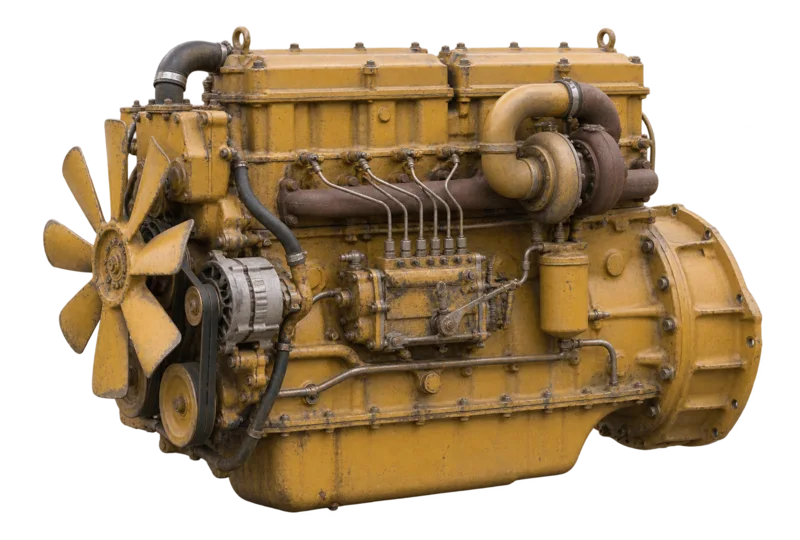
Key specifications
- Displacement
- 893 cu in, about 14.6 L.
- Configuration
- Turbocharged inline six with dual overhead camshafts. Period documents include turbo-only and aftercooled groups.
- Fuel system
- Mechanical injection pump and individual injectors, identified in period certification.
- Typical factory output
- CARB’s model-year 1976 table documents a 425 hp at 2,100 rpm 1693 configuration. Other 1693 calibrations were available.
- Peak torque
- 1,275 lb-ft on the 425 hp rating in the federal 1977 table.
- Bore × stroke
- 5.4 × 6.5 in, nominal.
- Aspiration
- Turbocharged. Cat’s 1976 highway records list separate turbo-only and aftercooled groups.
- Valvetrain
- Dual overhead camshaft layout.
- Rated power speed
- 2,100 rpm for the cited 425 hp 1976 rating.
Where it was used
Cat’s history places the 1693’s introduction in the 1960s. This directory begins in 1975. CARB’s 1975 Kenworth and 1976 Caterpillar records and federal 1977 model-year engine tables anchor the examples in this interval. Its upper boundary is the latest model-year evidence used here.
- Kenworth’s 1975 heavy-duty California approval lists the 1693TA alongside several Cat and other engine options. The order is evidence of a period specification, so check an individual truck’s chassis build and tag.
- Caterpillar describes the 1693 as an owner-operator truck engine with a strong following in the western United States.
Service life
300,000–400,000 milesHistorical heavy-duty rebuild benchmark
An early-1990s EPA study reported this range between rebuilds for heavy-heavy-duty diesels in its survey. The range describes the vehicles surveyed and is a point of comparison for this engine’s era.
For a surviving engine, compare prior head and fuel-system work, oil history and measured condition under the correct 1693 manual. An old claim of a high fuel setting is poor evidence of mechanical health or the original factory rating.
Typical problems and service checks
Pump and injector identity
The period certification lists more than one identification combination. Compare the serial and physical pump and injectors to the applicable catalog before purchasing. Document any old repairs before a technician evaluates a smoke or fuel-delivery complaint.
Cooling and aftercooling records
Capture the installed air and coolant circuit layout before quoting parts. For an under-load temperature complaint, bring the radiator condition and recent coolant service information. The test must reflect the actual pump, turbo and aftercooler configuration.
Top-end inspection scope
The dual overhead cams call for engine-specific information when a head or valvetrain issue is suspected. Ask for the inspected surfaces and measured findings before ordering. Repairs on a neighboring 3406 model do not supply the 1693 procedure.
References
- Caterpillar truck-engine history
- Caterpillar legacy 1693 truck engine manuals and parts resources
- CARB 1975 Kenworth highway vehicle approval with Cat 1693TA and 3406
- CARB original 1976 Caterpillar highway certification
- Federal Register heavy-duty engine rating table for model year 1977
- MAHLE North American commercial engine interchange catalog, Caterpillar engine dimensions
- U.S. EPA, Heavy-Duty Engine Rebuilding Practices